
Token Standards Explained: ERC-20, ERC-721, and Beyond
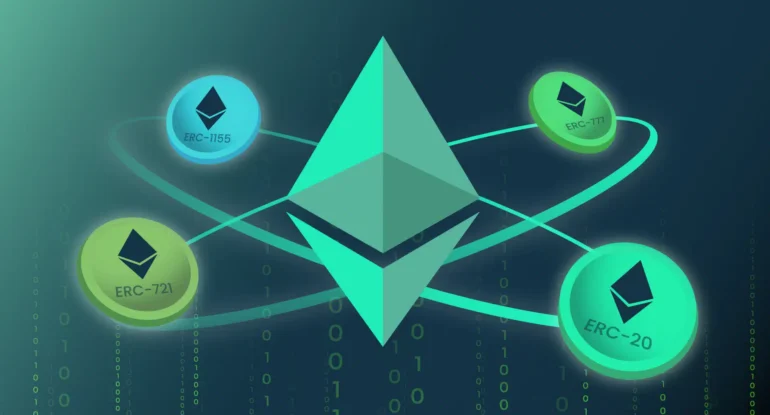
The fundamental units of blockchain ecosystems are tokens. From cryptocurrencies and stablecoins to NFTs and gaming assets, tokens power nearly every decentralized application.
Behind every token lies a token standard—a set of rules that ensures compatibility, security, and interoperability across wallets, exchanges, and smart contracts.
What Are Token Standards?
Token standards are technical specifications that define how tokens behave on a blockchain. They outline functions such as:
- How tokens are transferred
- How balances are tracked
- How ownership is verified
- How smart contracts interact
Standardization allows developers to build applications that work seamlessly across the ecosystem.
ERC-20: The Fungible Token Standard
What Is ERC-20?
ERC-20 is the most widely used token standard on Ethereum. It defines rules for fungible tokens, where each unit is identical and interchangeable.
Common Use Cases
- Cryptocurrencies
- Stablecoins
- Utility tokens
- Governance tokens
Key Features
- Standardized transfer functions
- Wallet and exchange compatibility
- Easy integration into DeFi
Popular ERC-20 Tokens
- USDT
- USDC
- LINK
- UNI
ERC-721: The NFT Standard
What Is ERC-721?
ERC-721 introduced non-fungible tokens (NFTs), where each token is unique and cannot be exchanged one-to-one.
Common Use Cases
- Digital art
- Collectibles
- Gaming assets
- Virtual real estate
Key Features
- Unique token IDs
- Proven ownership
- Scarcity and traceability
ERC-1155: Multi-Token Standard
What Is ERC-1155?
ERC-1155 combines fungible and non-fungible tokens into a single smart contract.
Benefits
- Lower transaction costs
- Efficient batch transfers
- Ideal for gaming and metaverse assets
Beyond Ethereum: Other Token Standards
BEP-20 (BNB Chain)
Ethereum-compatible standard used on Binance Smart Chain.
SPL Tokens (Solana)
High-speed token standard optimized for low fees and scalability.
TRC-20 (Tron)
Used for fast and cheap stablecoin transfers.
Emerging and Advanced Token Standards
Soulbound Tokens (SBTs)
Non-transferable tokens representing identity, credentials, or reputation.
ERC-4626
Standardized vaults for yield-bearing tokens.
ERC-6551
NFTs that can own assets and interact with smart contracts.
Why Token Standards Matter
Enable interoperability
Improve security
Accelerate development
Reduce integration errors
Support ecosystem growth
- Without standards, blockchain ecosystems would be fragmented and inefficient.
- Token Standards and DeFi
- DeFi platforms rely heavily on token standards to enable:
- Automated trading
- Lending and borrowing
- Yield farming
- Governance participation
- ERC-20 tokens remain the backbone of DeFi.
- The Future of Token Standards
- Future standards will focus on:
- Better composability
- Cross-chain compatibility
- Improved security
- Enhanced user experience
- As Web3 evolves, token standards will continue to expand beyond finance into identity, gaming, and governance.
- Final Thoughts
- Understanding token standards is essential for navigating blockchain and Web3 ecosystems. Whether you’re dealing with ERC-20 tokens, NFTs, or emerging standards, these frameworks enable seamless innovation and adoption.
- Token standards are not just technical rules—they are the foundation of decentralized digital economies.