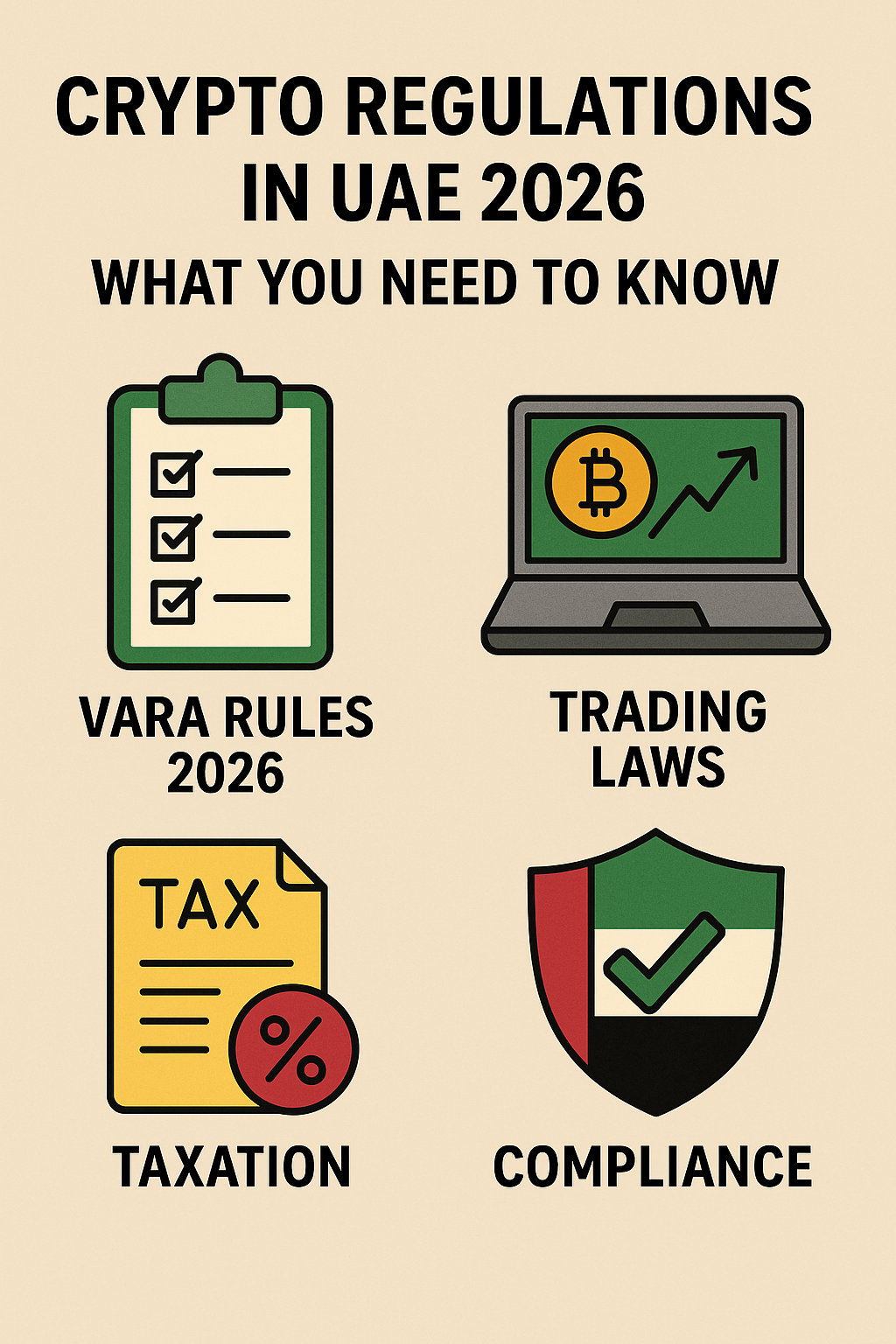
Crypto Regulations in UAE 2026: What You Need to Know
The UAE continues to strengthen its position as a global crypto powerhouse. By 2026, the country has introduced clearer rules, stricter licensing requirements, and better consumer protection systems—making the crypto industry more secure and business-friendly.
Whether you’re an investor, trader, or crypto business owner in the UAE, understanding the regulations is essential for staying compliant and avoiding penalties.
Is Crypto Legal in the UAE in 2026?
Yes. Crypto is fully legal in the UAE when traded through regulated and licensed platforms.
The three main authorities overseeing crypto in 2026 are:
1️⃣ VARA (Virtual Assets Regulatory Authority – Dubai)
Regulates all virtual asset activities in Dubai (except DIFC).
Covers:
-
Exchanges
-
Brokers
-
Web3 companies
-
Custody services
-
ICOs / token issuances
2️⃣ ADGM (Abu Dhabi Global Market)
Regulates exchanges and institutional platforms based on global financial standards.
3️⃣ UAE Central Bank
Regulates stablecoins, anti-money laundering (AML), and fiat-to-crypto operations.
Key Crypto Regulations in UAE for 2026
1. Strict Licensing Rules for Crypto Businesses
Companies must obtain licenses from:
-
VARA (Dubai)
-
ADGM (Abu Dhabi)
-
SCA (Securities and Commodities Authority – Mainland UAE)
License categories include:
-
Crypto exchange license
-
Custody license
-
Broker-dealer license
-
Staking/DeFi service approvals
-
NFT marketplace registration (new 2026 updates)
Unlicensed operations can result in:
❌ Heavy fines
❌ Platform bans
❌ Business closure
2. New AML & KYC Requirements (2026 Update)
To prevent fraud and money laundering, new guidelines include:
-
Mandatory KYC verification for all users
-
Real-time transaction monitoring
-
Reporting suspicious activities
-
Customer risk scoring system
-
Wallet address screening
This applies to all UAE-based exchanges and crypto businesses.
3. Clear Tax Rules for Crypto (Good News for Investors!)
The UAE still offers zero personal income tax on crypto, but 2026 introduces:
Tax updates effective 2026:
-
0% tax on crypto trading profits for individuals
-
9% corporate tax on crypto-related business income
-
NFTs and tokenized assets fall under digital goods taxation for companies
Investors remain tax-friendly, while businesses follow standard UAE corporate tax.
4. Stablecoin Rules Introduced by the Central Bank
The UAE Central Bank now regulates:
-
Fiat-backed stablecoins
-
Licensing for issuers
-
Reserves backing requirements
Only approved stablecoins (e.g., USDC-equivalent UAE regulated tokens) can be used in financial institutions.
5. Protection for Retail Investors
New measures added in 2026:
-
Risk warnings for leveraged trading
-
Maximum leverage limits
-
More transparent fee structures
-
Asset segregation rules (funds kept separate from company accounts)
This helps prevent losses and ensures safer trading conditions.
6. Rules for Web3, NFTs & the Metaverse
The UAE now considers NFTs as digital assets, requiring marketplaces to register with VARA.
Web3 startups enjoy supportive regulations but must follow:
-
Data protection rules
-
Anti-fraud guidelines
-
Age-appropriate content for metaverse platforms
7. Penalties for Non-Compliance
Failure to follow UAE crypto regulations can result in:
-
Fines up to AED 10 million
-
License cancellation
-
Blocking the platform in the UAE
-
Possible legal action
How to Stay Compliant as a Crypto User in the UAE (2026)
✔ Use only licensed UAE exchanges
✔ Complete KYC & identity verification
✔ Avoid unregulated P2P groups
✔ Store crypto in a secure wallet
✔ Follow updates from VARA & SCA
Pro Tip:
Always check if an exchange is registered with VARA or ADGM before transferring funds.
Best Regulated Crypto Exchanges in UAE (2026)
1. Binance MENA (VARA)
Largest global exchange with full Dubai compliance.
2. BitOasis (VARA Registered)
Popular in UAE and GCC, easy for beginners.
3. Crypto.com (ADGM)
Strong institutional-grade compliance.
4. eToro (UAE-licensed for multi-asset trading)
Good for beginners.
Final Thoughts
The UAE is leading the world with clear, transparent, and investor-friendly crypto laws.
By 2026, regulations are stronger but also more structured—creating a safer digital asset ecosystem for traders, businesses, and global investors.
If you plan to trade or launch a crypto project in the UAE, staying updated with these regulations is essential.