
Layer 1 vs Layer 2 Blockchain: Key Differences, Use Cases & Future
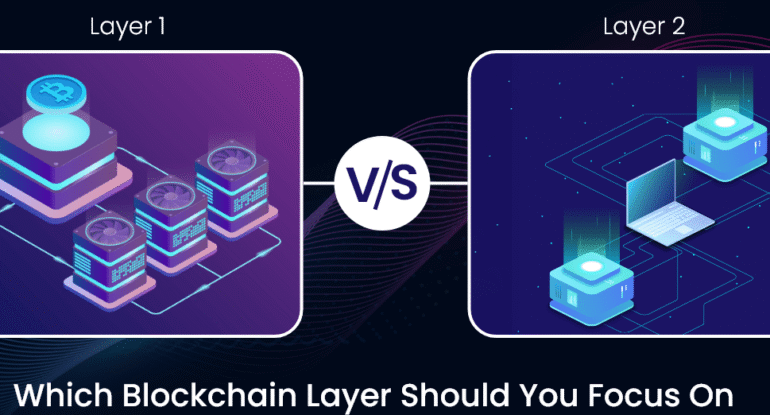
As blockchain adoption grows, networks must process more transactions faster and cheaper. This is where Layer 1 and Layer 2 blockchains come in. They work together to improve scalability without sacrificing security or decentralization.
What Is a Layer 1 Blockchain?
Definition
A Layer 1 blockchain is the base blockchain network. It handles transaction processing, consensus, and security directly on its main chain.
Popular Layer 1 Blockchains
- Bitcoin
- Ethereum
- Solana
- Avalanche
- Cardano
Functions of Layer 1
- Processes transactions
- Maintains consensus
- Provides security
- Stores data permanently
Limitations of Layer 1
- Limited scalability
- Network congestion
- High transaction fees during peak demand
What Is a Layer 2 Blockchain?
Definition
A Layer 2 blockchain is a secondary framework built on top of a Layer 1 blockchain. It processes transactions off the main chain and then settles the final result back on Layer 1.
Popular Layer 2 Solutions
- Arbitrum
- Optimism
- zkSync
- Polygon
- Lightning Network
Benefits of Layer 2
- Faster transactions
- Lower fees
- Reduced congestion
- Maintains Layer 1 security
Layer 1 vs Layer 2: Comparison
| Feature | Layer 1 | Layer 2 |
|---|---|---|
| Location | Base blockchain | Built on top of L1 |
| Speed | Slower | Much faster |
| Fees | Higher | Very low |
| Security | Native | Inherited from L1 |
| Scalability | Limited | Highly scalable |
| Use Case | Core network | Scaling solution |
Why L1 & L2 Both Matter
Layer 1 provides security and decentralization. Layer 2 provides scalability and affordability. Together, they solve blockchain’s biggest challenge: scaling without compromise.
Future of Blockchain Scaling in 2026
By 2026, most blockchain activity happens on Layer 2, while Layer 1 serves as the secure settlement layer. This model enables mass adoption of Web3, DeFi, NFTs, and enterprise blockchain solutions.
Conclusion
Layer 1 and Layer 2 are partners rather than rivals. Layer 2 provides performance and accessibility, while Layer 1 guarantees security and trust. The future of blockchain is defined by their partnership.