
How to Avoid Cryptocurrency Scams in 2026 (Complete Guide)
Cryptocurrency adoption continues to grow in 2026, but so do the risks. Scammers have become more advanced, using AI-generated videos, fake trading bots, and deepfake influencers to trick investors. Whether you’re a beginner or an experienced trader, understanding these threats is essential.
This guide will walk you through the latest crypto scams, warning signs, and best security practices to help protect your cryptocurrency in 2026.
1. The Evolution of Crypto Scams in 2026
Scammers are now using sophisticated technologies like:
✅ AI-generated influencer videos
Deepfakes of famous CEOs and crypto influencers promoting fake tokens.
✅ Hacked verified accounts
Scammers take over verified X/Instagram accounts and promote “risk-free airdrops”.
✅ Fake crypto investment apps
Professional-looking apps that steal private keys once downloaded.
✅ Advanced phishing bots
Bots that respond instantly to your posts asking for wallet help.
Because of these advancements, crypto users must stay alert.
2. Common Cryptocurrency Scams to Watch in 2026
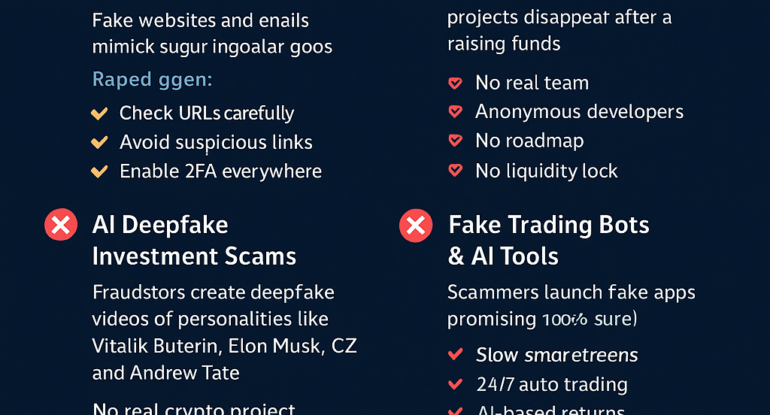
2.1 Phishing Scams (Still #1 Threat)
Fake websites and emails that mimic popular exchanges or wallets like:
-
Binance
-
Coinbase
-
MetaMask
Goal: Steal your private keys or seed phrase.
How to avoid it:
-
Always check URLs carefully.
-
Never click suspicious links in emails or DMs.
-
Enable 2FA everywhere.
2.2 Rug Pulls & Fake Tokens
New meme coins and NFT projects may suddenly disappear after raising funds.
Red Flags:
-
No real team behind the project
-
Anonymous developers
-
No roadmap
-
No liquidity lock
Avoid it:
Use platforms like:
-
DEXTools Honeypot Checker
-
TokenSniffer
2.3 AI Deepfake Investment Scams
Fraudsters create deepfake videos of personalities like:
-
Vitalik Buterin
-
Elon Musk
-
CZ
-
Andrew Tate
Claiming to give “free crypto giveaways”.
Rule:
No real crypto project will ever ask for your wallet seed phrase or request funds for a giveaway.
2.4 Fake Trading Bots & AI Tools
Scammers launch fake apps promising:
-
100% guaranteed profit
-
24/7 auto trading
-
AI-based returns
How to avoid:
-
Verify apps on official marketplaces
-
Avoid downloading APK files
-
Research the team background
2.5 Ponzi and MLM Crypto Schemes in 2026
Some platforms claim:
“Earn 5% daily by inviting users.”
These are classic Ponzi schemes disguised as staking programs.
3. Major Warning Signs of a Crypto Scam
Here are universal red flags:
❌ Promises of guaranteed profits
Crypto is volatile—no profits are ever guaranteed.
❌ Pressure to act fast
Scammers use urgency to stop you from thinking clearly.
❌ Unverifiable team
No LinkedIn profile, no history — big red flag.
❌ No smart contract audits
Always look for audits from:
-
CertiK
-
Hacken
-
Solidity Finance
❌ Requests for your private key or seed phrase
This is the biggest red flag of all.
4. How to Stay Safe: Best Practices for 2026
4.1 Use Hardware Wallets
Cold wallets like Ledger or Trezor offer the highest security.
4.2 Double-Check Links with URL Checkers
Use tools such as:
-
VirusTotal
-
Google Safe Browsing
4.3 Avoid Clicking on Crypto Ads
Scammers often buy paid ads on Google and social platforms.
Always visit official websites manually.
4.4 Use Multi-Factor Authentication (MFA)
Enable:
-
2FA with Google Authenticator
-
Email verification
-
Biometric lock
4.5 Verify Projects Before Investing
Check:
-
Team transparency
-
Smart contract code
-
Roadmap and whitepaper
-
Community presence (Telegram / X)
5. What to Do If You Suspect a Scam
Step 1: Stop all communication.
Step 2: Do NOT send any more funds.
Step 3: Report the scam to:
-
UAE Virtual Assets Regulatory Authority (VARA)
-
Local police cyber unit
-
Exchange support team
Step 4: Warn others by posting online.
Conclusion
Cryptocurrency scams in 2026 have become more advanced, but you can avoid them with awareness and strong security habits. Always research before investing, never trust too-good-to-be-true offers, and secure your assets with hardware wallets and multi-factor authentication.