
Understanding Proof of Work vs Proof of Stake
Blockchain networks rely on consensus mechanisms to verify transactions and secure the network. The two most widely used systems today are Proof of Work (PoW) and Proof of Stake (PoS).
Understanding the difference between them helps investors, developers, and beginners choose the right blockchain platforms.
What Is Proof of Work (PoW)?
Proof of Work is the original consensus method used by Bitcoin.
How It Works
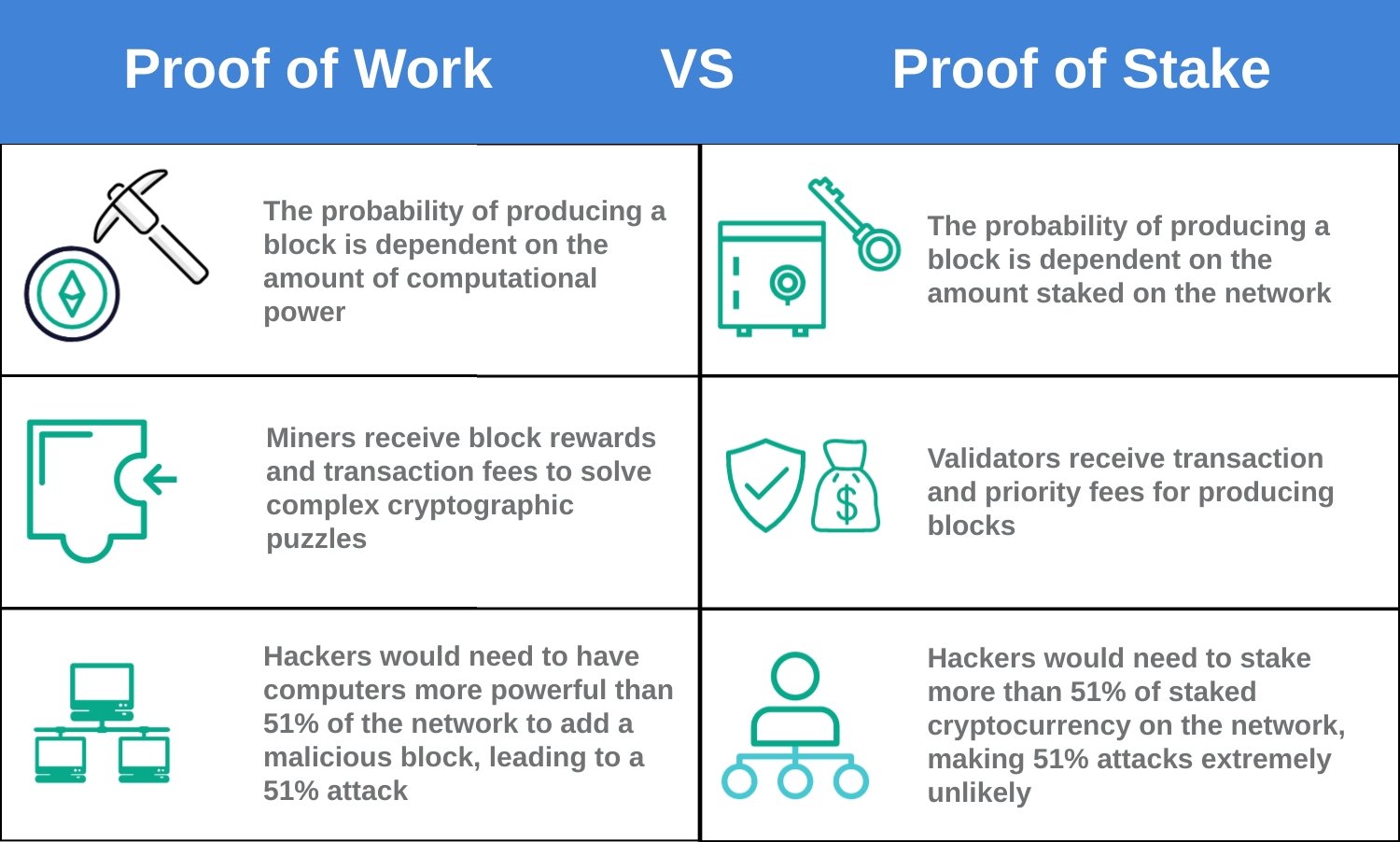
Miners solve complex cryptographic puzzles using computing power. The first miner to solve the puzzle validates the block and earns a reward.
Key Features of PoW
-
Highly secure
-
Decentralized
-
Energy-intensive
-
Requires powerful hardware
Examples
Bitcoin, Litecoin, Dogecoin
What Is Proof of Stake (PoS)?
Proof of Stake selects validators based on the number of coins they hold and lock (stake) in the network.
How It Works
Validators are chosen to confirm transactions according to their stake size and behavior, rather than computing power.
Key Features of PoS
- Energy efficient
- Faster transactions
- Lower hardware requirements
- Scalable
Examples
Ethereum 2.0, Cardano, Solana, Polkadot
Proof of Work vs Proof of Stake: Key Differences
| Feature | Proof of Work | Proof of Stake |
|---|---|---|
| Security | Very High | High |
| Energy Use | Very High | Low |
| Hardware Cost | Expensive | Low |
| Speed | Slower | Faster |
| Decentralization | Strong | Moderate |
| Environmental Impact | High | Minimal |
Advantages of Proof of Work
- Proven security model
- Highly decentralized
- Resistant to attacks
- Disadvantages of Proof of Work
- Massive energy consumption
- High operational costs
- Environmental concerns
Advantages of Proof of Stake
- Environmentally friendly
- Lower transaction costs
- Faster network performance
- Encourages long-term participation
- Disadvantages of Proof of Stake
- Wealth concentration risk
- Newer and less tested
- Potential centralization
Why Ethereum Switched to Proof of Stake
Ethereum moved from PoW to PoS to:
- Reduce energy consumption by over 99%
- Increase scalability
- Lower transaction fees
- Support sustainable blockchain growth
Future of Blockchain Consensus
Most modern blockchains are moving toward PoS and hybrid models to balance security, efficiency, and decentralization.
Conclusion
While Proof of Stake offers scalability and sustainability, Proof of Work offers unparalleled security. Both are vital to the cryptocurrency ecosystem, but energy-efficient consensus models are clearly the way of the future.